PROJECT MANAGEMENT
Can AI maintain coherent project knowledge across homeowner, architects, engineers, authorities, finance, contractors and suppliers?
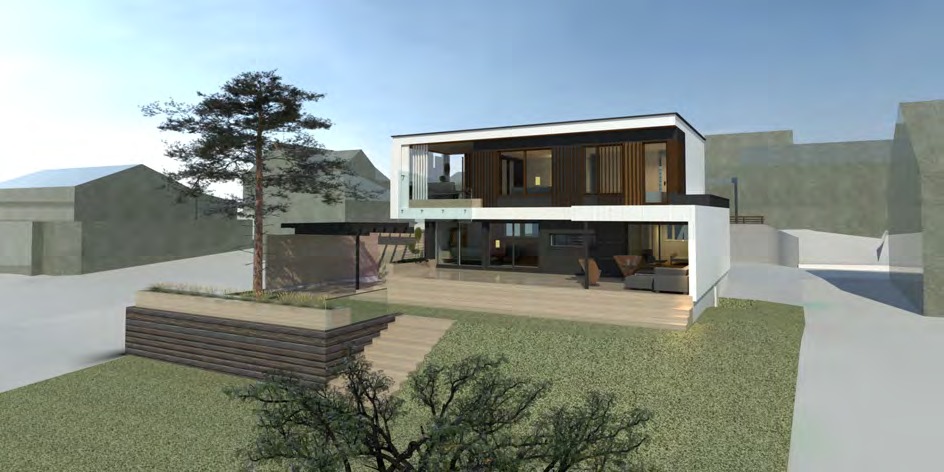
GM30 / AI case study / Hypothesis
One house. One complete transformation. One continuous AI-supported project conversation.
Specific project experiment
PROPOSED / NOT YET MEASURED
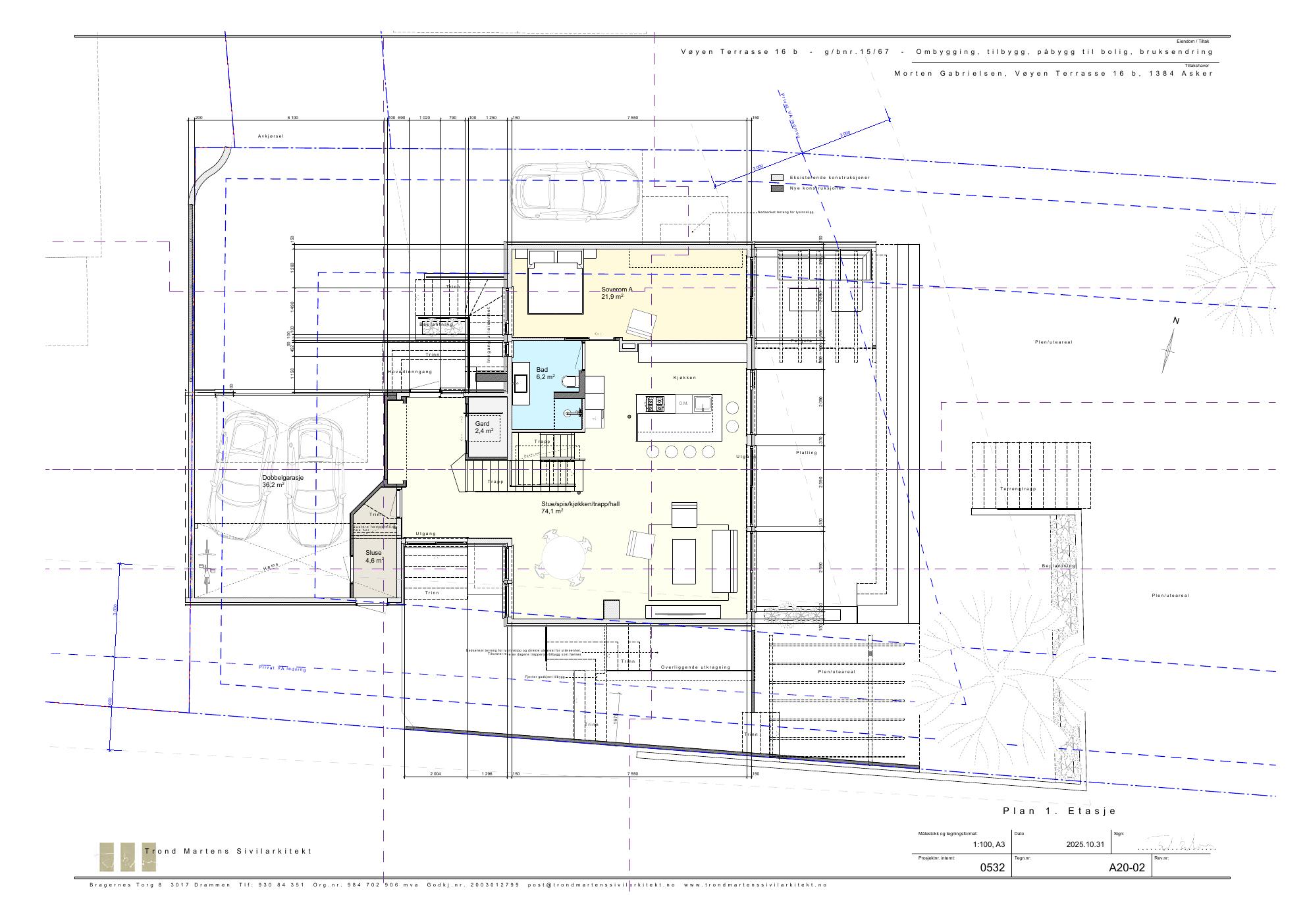
Can AI-supported project management help the homeowner coordinate architect, RIB, geotechnics, building physics, acoustics, HVAC, electrical, cost planning, contractor and authorities around one complex excavation and lower-floor expansion?
AI may organise questions, records, comparisons and decisions. It does not establish feasibility, design structure, approve work or replace accountable professionals.
Coordination participants
Evidence fields
Proposed project stages
Existing terrain
Excavation
Foundation-ready
Retaining walls + slab
Weather-tight shell
Technical installation
Interior fit-out
Studio / Gym / Cinema complete
The core hypothesis
GM30 tests this question through one real residential transformation—from redesign and finance through engineering, construction and sustainable operation. It does not claim the result before evidence exists.
Can AI maintain coherent project knowledge across homeowner, architects, engineers, authorities, finance, contractors and suppliers?
Can AI reduce duplicated work, information-search time, administrative friction, unnecessary iterations and delays?
Can AI improve coordination, traceability, specification control, risk identification and decision continuity?
Can project intelligence remain useful after completion for energy, indoor climate, maintenance, materials and future upgrades?
Can AI-assisted project management improve the conditions for external financing and partner participation—and help enable completion before 2030?
Market context
GM30 is not developing its AI hypothesis in isolation. Norwegian architecture and property-development actors are already beginning to commercialise AI-assisted workflows for tasks such as property and site analysis combined with professional architectural assessment.
01
AI helps analyse development potential.
02
AI assists design and option development.
GM30 hypothesis
AI ASSISTS.
PROFESSIONALS DECIDE.
What the hypothesis tests
Positioned as a standard GM30 is testing the potential for—not an achieved industry standard.
Research dimension 05
Hypothesis / Not yet proven
Can AI-assisted project management increase the ability of a privately owned residential transformation project to attract external financing, strategic partnerships, supplier contributions and sponsorship—and help enable completion of GM30 before 2030?
This is a hypothesis to be measured. AI does not obtain financing, and no contribution or completion outcome is implied.
01
Banks / construction finance / potential long-term financing
02
Eligible energy / housing-quality support
03
Products / materials / technology / professional services / discounts
04
Cash or in-kind support under a defined commercial partnership
Categories remain separate in measurement and reporting.
Wider research question
AI may assist with
AI does not make credit decisions.
AI does not negotiate authority away from the owner.
AI does not replace legal, financial, engineering or construction professionals.
Measurement framework
The eventual case study should report successful, declined and inconclusive outcomes. If AI-assisted project management does not materially improve results, that remains a valid finding.
Important outcome metric
Target completion: before 2030
Hypothesis / Not yet proven
The continuous project conversation
The experiment asks whether context can travel from the earliest idea through the operational life of the house—without replacing professional judgement.
IDEA
EXISTING BUILDING
DESIGN
REGULATION
FINANCE
ENGINEERING
PROCUREMENT
CONSTRUCTION
COMMISSIONING
OPERATION
MAINTENANCE
FUTURE UPGRADE
AI coordinates information.
Professionals remain accountable.
From fragmentation to coordination
The industry already works through many necessary formats and specialist systems. GM30 explores whether an AI-supported layer can make their relationships easier to follow.
Today / Useful records, often separate
Emails
PDFs
Drawings
Spreadsheets
Portals
Quotes
Product sheets
Meeting notes
Individual knowledge
Separate systems
GM30 / Coordination hypothesis
Shared project knowledge
Structured decisions
Traceable documentation
Connected materials
Connected costs
Connected drawings
Connected performance
Continuous history
SWIP ecosystem
SWIP explores coordination of people, services, activities and resources. GM30 tests that philosophy at the scale of architecture, professionals, finance, materials, construction, technology and building performance.
Future knowledge layer
This is prepared as a future architecture only. Each connection must be supported by a real source; an empty field remains unknown.
Ask GM30 / Future supported questions
Why was this decision made?
Which drawing approved this change?
Which engineer reviewed it?
What did the original specification require?
Which product was ultimately installed?
What did it cost?
Does it have an EPD?
What maintenance does it require?
How does it affect energy use?
What changed during construction?
Is the measured result consistent with the design assumption?
What should be considered if this part of the house is changed in ten years?
Industry-standard hypothesis / Not a claim
GM30 explores whether this model could inform a future coordination standard. It tests the potential and may provide learnings relevant to other projects; it has not established a standard.
GM30 is not a demonstration of AI technology. It is a test of a possible new way of coordinating one real building project.